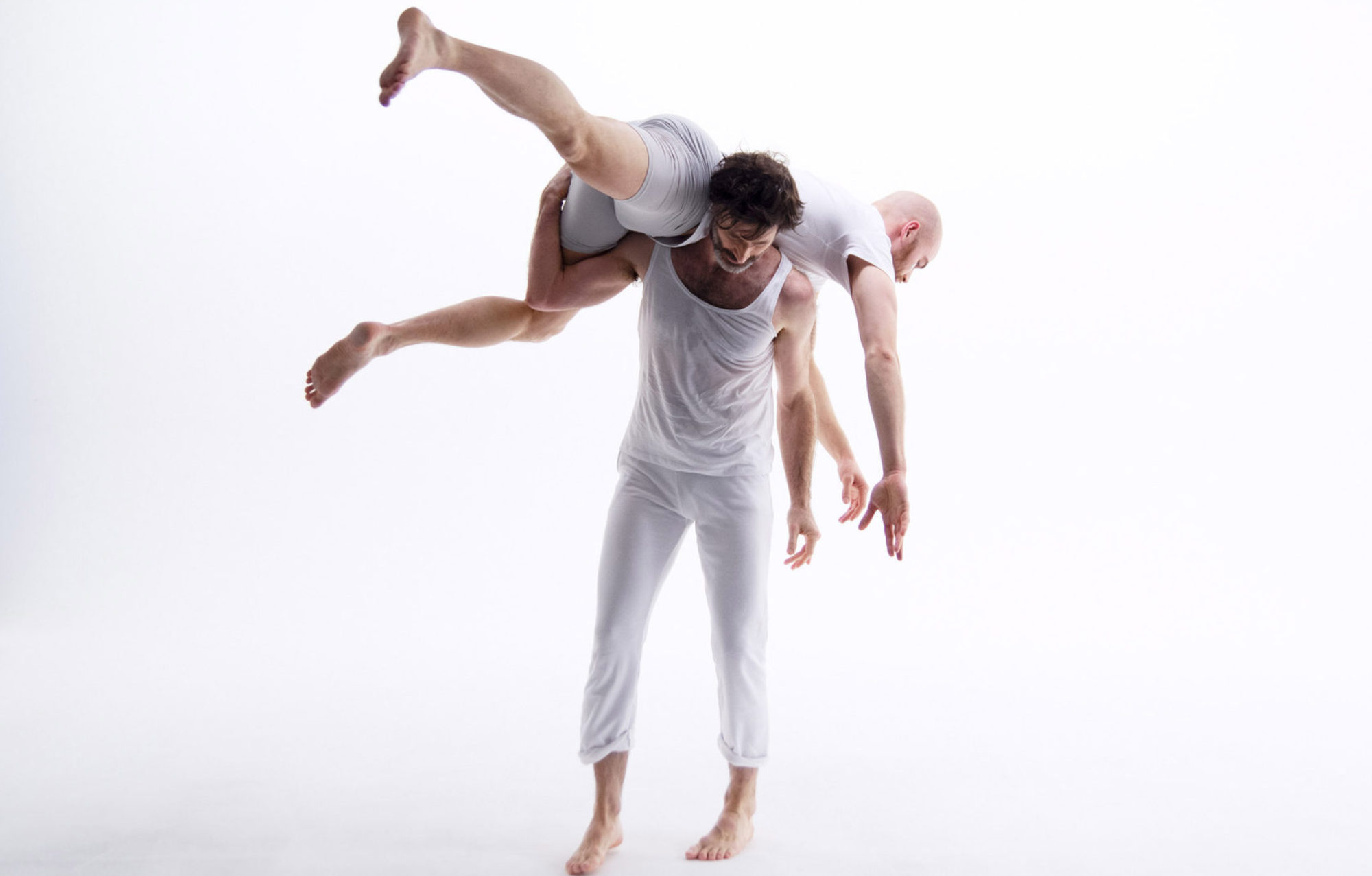
One Idea – Line
Neuro
This graph illustrates possible iterations of Neuro as expressed through the two variables of velocity of movement and change of shape. Neuro is part of Lower Left Performance Collective artist and founder Dr. Nina Martin's Rewire Dancing States movement technique. This graph proposes that the degree of change of shape and the velocity of the movement are variables for composing along with the predetermination of the next shape.
Complexity of Transitions
This animation deals with the complexity of an ensemble’s shape, or an individual, for that matter, and the complexity of the transition to the next shape. Thinking specifically of the Ensemble Thinking scores, One Idea and Complete the Form, in that they are a similar score, but have different relationships to complexity. What I am proposing with this model is that the transition to the next shape in either score can be complex or quite simple.
One Idea has a low level of ensemble shape complexity, whereas Complete the Form has a high level of ensemble shape complexity. How exactly to measure the level of complexity of transition to the next shape is open. It could be that one person takes a lot of movement and time to arrive at the next location and shape. It could be that everyone shifts a little bit, as with classic and clean One Idea.
thoughts?
Degrees of Freedom
The above animation deals with the degrees of freedom present in a contact improvisation based dance.
Hypothesis 1: The rolling connection between dancers is ascendent because it allows for the greatest amount of freedom for each dancer.
Hypothesis 2: Dancers that focus on maintain the highest degree of freedom in their dance create aesthetically flat dances.
Number Score
These XYZ axes looks at Number Score from Ensemble Thinking through the variables of number of dancers, who the dancers are, and the material that they are working with.
These axes show that it possible to change each of these variables independently from one another. All three can change, only two can change, or only 1 can change.
Dance Improvisation as diagnosing
Below is a modified text and the original text from page 247 of Richard Sennett’s The Craftsman. I think a person experienced in improvising, dance for example, is similar to an experience doctor diagnosing a patient. The person with experience thinks in larger units of time, makes me think of the movemes from the chapter on Tango in the Oxford Improvisation in Dance tome. I think also a person with experience can also think in smaller units of time, thinking of Nita Little’s Thin Slicing of time. An person with experience can oscillate between large and small units of time, anticipating on several scales.
Modified Text
The experienced improviser, as one would expect, is a more accurate diagnostician.This is due in large part to the fact that he or she tends to be more open to oddity and particularity in movement, whereas the novice is more likely to be a formalist, working by the book, rather rigidly applying general rules to particular cases. Moreover, the experienced improviser thinks in larger units of time, not just backward to cases in the past but, more interestingly, forward, trying to see into the dance’s indeterminate future. The novice, lacking a storehouse of histories, has trouble imagining what might be an individual moment’s fate.
Original Text
The experienced doctor, as one would expect, is a more accurate diagnostician. This is due in large part to the fact that he or she tends to be more open to oddity and particularity in patients, whereas the medical student is more likely to be a formalist, working by the book, rather rigidly applying general rules to particular cases. Moreover, the experienced doctor thinks in larger units of time, not just backward to cases in the past but, more interestingly, forward, trying to see into the patient’s indeterminate future. The novice, lacking a storehouse of clinical histories, has trouble imagining what might be an individual patient’s fate.