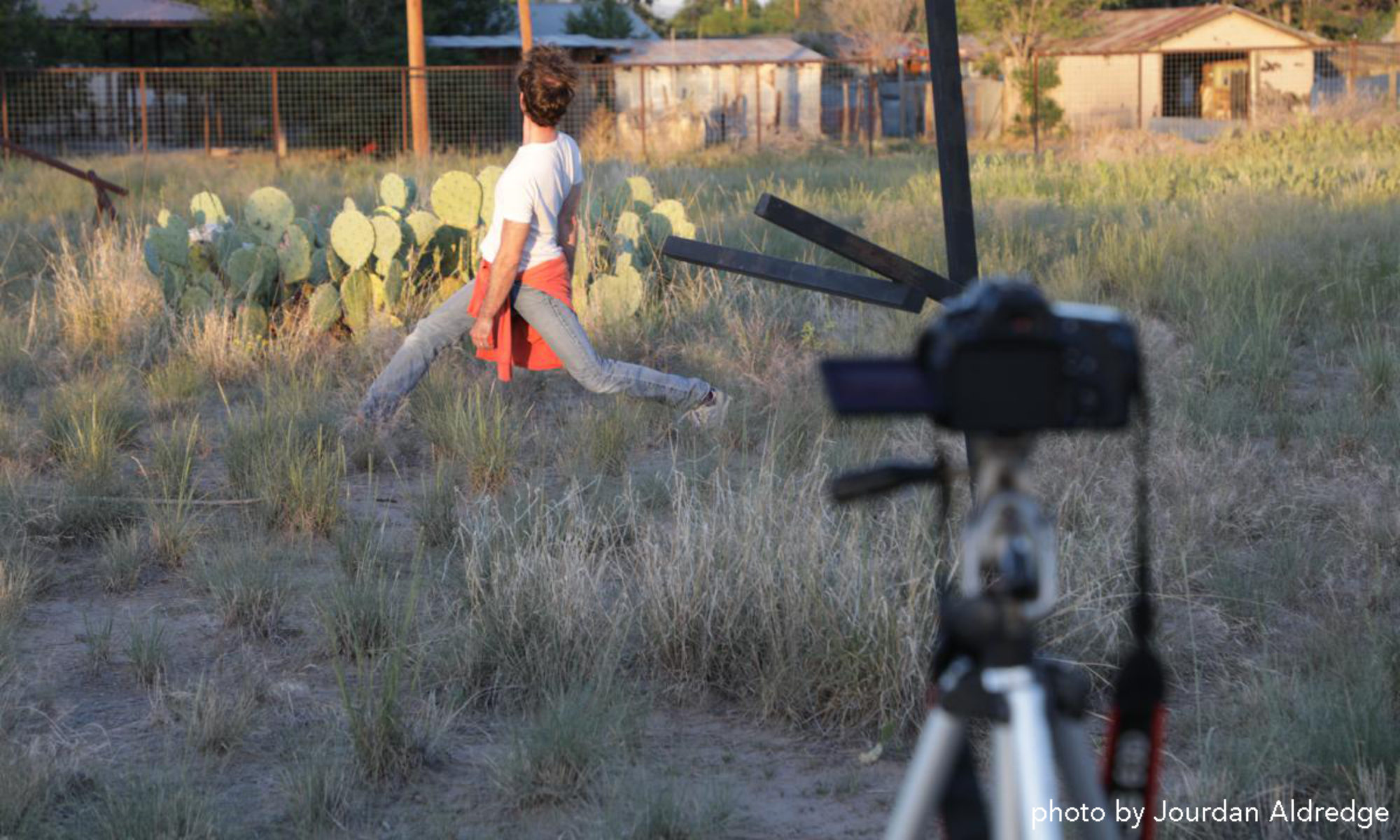
Below is the text for my newest piece, The Range of Acceptable Outcomes, a lecture performance.
Please assume what you see here as zero. A zero, zero, zero, zero, zero, zero, zero, zero zero on a multi-dimensional co-ordinate system.
Let us say this costume is zero, not because it does not exist, but is zero in that we will measure the change in the costume during this performance from this point on. ΔCostume, if you will.
In fact performance can be seen as the measurement of the change, the Δ over time of the six performance elements. The one performance element that will not change in this performance is the performer.
Though that is debatable. I will get sweaty, some skin might rub off, I’ll age a bit, though we will all age the same amount so that we can ignore that variable. You as audience might decide to watch something, someone else, authorizing a different performer for your performance.
But anyways, let’s assume that everything you see here in this moment is the zero on a multidimensional grid.
Should I stop moving or be quiet?
No, as I will not stop reflecting light rays into your eyes, through the pupil, through the vitreus humor, activating your rods and cones, etc. on to your brain and as I will not stop being present in this spot.
Or yes, stop moving, talking and you close your eyes, cover your ears to create an even more truly empty zero point.
This piece, as I see, it is conceptually choreographed but executed improvisationally. To relate it to the three stages of creation, exploration, experimentation, and execution…
well, let me back up, what do I mean by “it”?
The word it is derived from the Middle and Old English word “hit”. Hit is a neuter version of he. The neutral he that I refer to is the performance that I have, am, and will present to, for and with you today.
This piece is not completely improvised because I already know what realms, ideas, genres, and themes I will be presenting and roughly how I will execute those ideas. I will be using the human form, using gesture, movement, and sound to convey those ideas that have been predetermined by time spent exploring, one of the stages of creation.
Side note – it is easy to think that these stages happen in a linear fashion – first explore, then experiment, then execute. And you will be forgiven if that is how you see it.
For all of our talk of contemporary this and post that, we really haven’t changed in 5000 years and all still want a refrigerator to keep our beers cold. Whether it’s avocado or stainless steel in color, we just want a cold beer.
But let me back up again, as I feel that I would be remiss to not define what I mean by explore, experiment and execute.
Exploration is the search before the research. It is the hearsal before the rehearsal. It is the discovery of what exists around you, whether you are in the studio or sitting on the subway thinking about your project. It is the discovery/invention of what tools you will be using in your project.
Exploration is the, and this maybe more important, the rejection of tools. A work of art is more about what it is not than what it is. Granted all types of infinities exist some are just larger than others.
Experimentation is the second stage. Once the tools have been selected/created, their relationships can be investigated. How do the tools interact? What poetry, if you will, do they create?
The final stage is execution – when the work is presented before an audience. I did use the words second and final indicating a linear relationship to time. That is the more traditional relationship, or more choreographed. The further apart the moments of exploration, experimentation, and execution in time are, the more choreographed the work. The closer in time those moments are, the more improvised the work.
This brings me to the 6 performance elements – Costume, Lighting, Sound, Performer, Set, and Movement.
The lighting is choreographed, set or predetermined. It is this, what you see. I chose this because this piece is not about lighting. Because the decision about what lighting to use and the execution of the lighting are separated along the space/time spectrum, we can call the lighting choreographed. If I were to decide midstream to alter the lights or have someone do so with a lighting board or open and close the curtains, the lighting would be more improvised.
I could have choreographed someone to improvise the lights.
As of now the costuming is choreographed. I am wearing this. You could say that I am trying to represent the traditional contemporary western male caucasian urban outfit with slight preppy undertones.
What happens to the costume during the performance has yet to be seen. In the midst of the execution of the performance, I might decide, consciously or not, conspicuously or not, to explore and experiment with the costuming.
Sound – the sound of my voice and whatever parts of me happen to hit any surfaces with enough force to generate vibrating airwaves. The idea of what kind of sounds to use is choreographed as I have decided to not use saxophone or an iPod or a parrot. What has a greater distance between its execution and experimentation is what I will be saying. Therefore more choreographed.
How I will be saying what I will say will be determined in the moment. The three stages in very close proximity to each other. Therefore more improvised.
This brings me to the performance element of set. No set, unless you count the empty stage we have here as a set.
But, I could create a change of set by changing the location of my performance. Going outside for example, or entering the audience. Maybe entering the storage closet and continuing there. For all intents and purposes the set is set. The execution, exploration, and experimentation stages for set all have a different location along the space/time continuum. Set, interestingly enough, is an anagram of est.
Movement – choreographed as in I can only do what my teachers have taught me. The times of movement exploration, execution and experimentation are different, therefore I consider the movement to be choreographed. I consider, though, the movement in this piece to be improvised within that choreographed frame.
I do not know exactly where I will be, when I will be there, what level I will be at, what body parts will be still, which moving, etc. During the execution of this piece today, now…now is here is harmony, something I do, something I see in an audience member, an observer/participant, though more on the observer end, will probably trigger a question. Will open up an avenue for exploration. I then might begin experimenting with the variables discovered in that exploration.
But as you are witnessing/participating/observing my explorations and experimentations, could we not then say that it is at the same an execution also, collapsing all three stages of creation into a singularity? A singular moment in which what I am doing is what you are seeing, when we are discovering the same thing at the same time. We merge becoming essentially one, but opposite sides of that one singular sensation – improvisation.
Coming back to costume. What ΔCostume have we seen thus far? How are the pants? The shirt? The tie.
Talk about a loaded image.
The inherent meaning. Yes, the inherent meaning. We all carry our inherent meanings around with us for others to read us and how we read others. Biases and stereotypes. Our aesthetic biases.
Two performers on stage (and this relates to the performance variable of performer): two men – discord; many men – war; one male one female – love; two females – a man is bad; many females – war is bad; two females and a man love triangle and he is an ass and one chick’s a bitch; two males and one female she is a slut, he is an ass and the other guy can’t get it up; two heterosexual couples and a couch – an Arthur Miller play. Three couples and a couch – an American sitcom. Four couples, a large tunnel made of brown sticks, a dog house and a table…
But as you have not seen the process and the time that went into making this piece, you can not for certain say which performance elements fall where when in relation to the stages of creation. Whether or not it was choreographed or improvised. Does it matter?