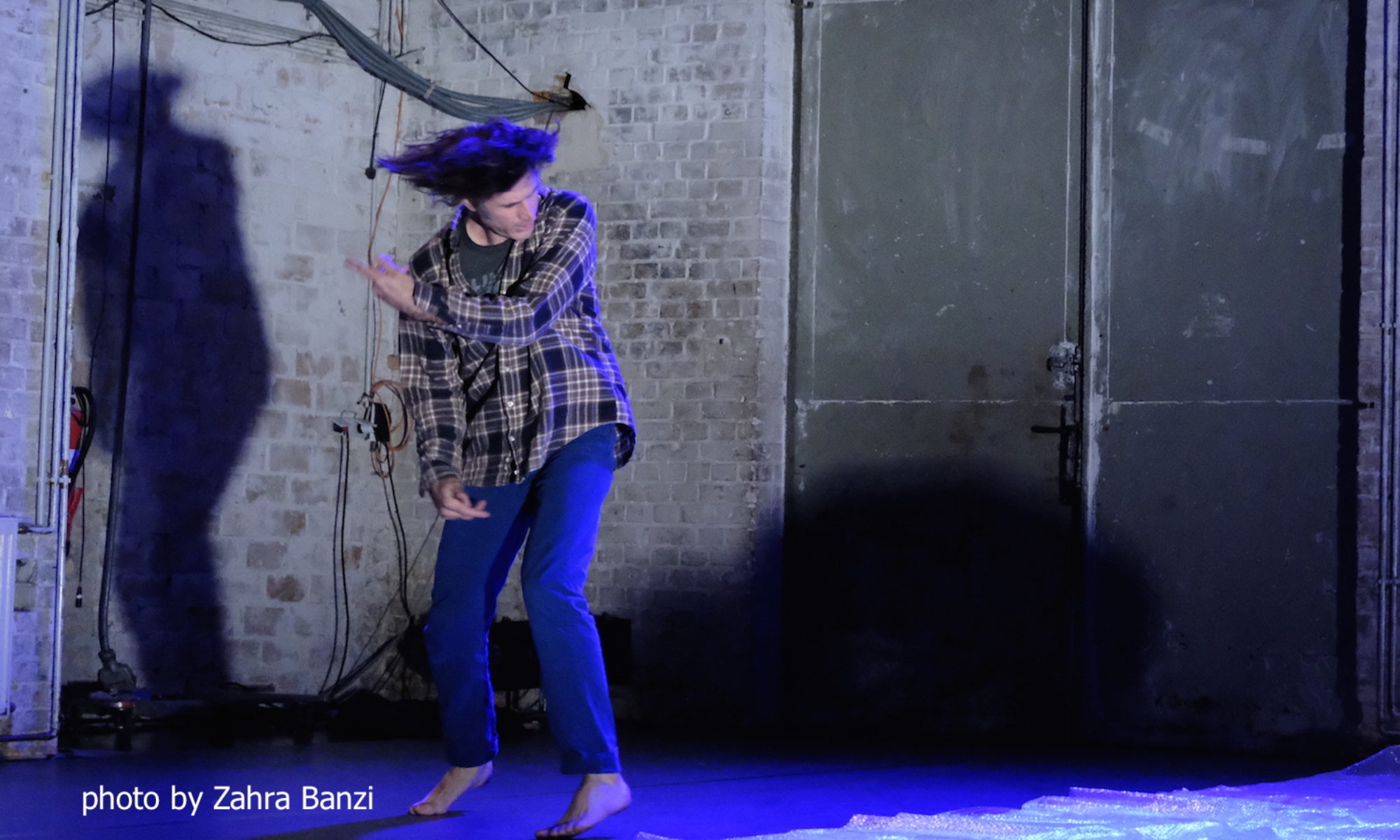
A brief discussion of gravity on WhatsApp with my Lower Left colleagues in relation to dance styles got me to think about how/if I relate CI to gravity. I do occasionally refer to gravity especially when teaching partnering pathways, of how at the top of the arc a person has no weight because for a moment gravity is no longer acting on them, and how weight lessens as someone goes up and increases as they go down. Making them easier to move on the way up and at the top, rather than down. Also this week in my CI class at Marameo, I referred to the altas vertebra, having people tilt from there to sense the pressure change under their feet.
So one current hypothesis is that the earlier generations of CI practitioners were heavily into gravity because they were looking for an outside source to move and inspire them, rather than predetermined movements. That it was a post-modern move to relinquish agency to an outside source other than the individual’s will to generate the movement, a mode of killing the choreographer.
I tend to focus on the creation, operation, and dissolution of surfaces of contact, i.e., the improvising of the contact surfaces, their number, location, size, degree of pressure rather than gravity.
For me the focus on gravity relates to the first two phases of CI, sensing and mechanizing. Once a dancer is familiar with those phases, they can venture into the third phase – improvising. Another hypothesis is that much of CI teaching remains within sensing and mechanizing, and merely lets the improvising happen as a result of adapting to failed attempts at repeating pathways, at least that is what I would say from a lot of what I see here in Berlin, rather than having the improvising with and in contact be a conscious artistic choice in the moment.
(at some point, I will write more about the three phases of sensing, mechanizing, and improvising)