Is CI a Cunningham chance operation?

‘The dancers are called on not to express a particular emotion, or set of emotions, but instead to develop refined coping mechanisms for creating continuity between disarticulated movements while remaining sensitive to their location in space. They must keep time without musical cues; sense the presence of the other dancers on stage; know blindly proprioceptively, what these other dancers are doing; and adjust the the timing and scope of their movements accordingly, thereby expressing the “human condition” at hand. All this work is “expressive”-it belongs to the “category of expression”-insofar as it is demanded by a human situation on a stage and insofar as human situations on stages (or otherwise) constitute an embodied response to the present moment, an embodied response to the utterly unique conditions of existence at one given point in time.’ – Noland, C 2010, ‘The Human Situation on Stage: Merce Cunningham, Theodor Adorno, and the Category of Expression’, Dance Research Journal, 1, p. 55

In this quote, Noland is referring to Cunningham dancers dealing with the re-ordering of set phrase material.  When she writes (or otherwise), she could be referring to a contact improvisation jam.  I think it is a very apt description of an silent CI jam. In CI jams, dancers are constantly “using refined coping mechanisms for creating continuity between disarticulated movements while remaining sensitive to their location in space.”  [Though, how much contacters are actually aware of the whole space is open for debate! IMHO]

What people do at CI jams is, I would say, “an embodied response to the present moment, an embodied response to the utterly unique conditions of existence at one given point in time.” [Though, how much is actually an embodied response and not actually another iteration of habit is also open for debate. IMHO]

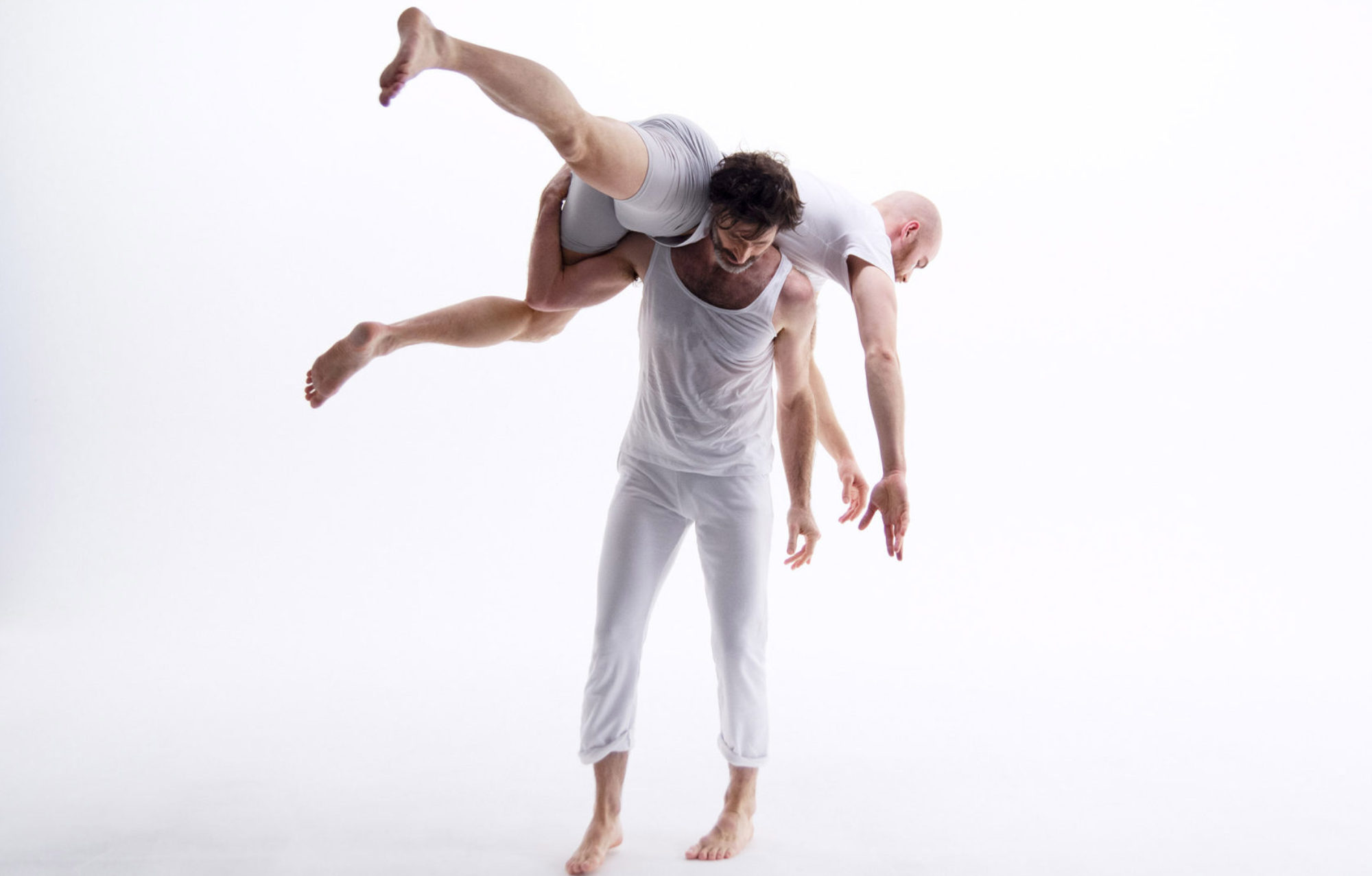
Are Cunningham choreographies that are governed by chance operations a contact improvisation jam?

Are contact improvisation jams a piece of choreography by Cunningham?

Paxton danced for Cunningham, after all.

Two definitions of Contemporary

Aphorism 3

Contemporary – adopting an ever-shifting set of values so as to elude any sort of qualitative criteria. Contemporary – adopting a differing set of values so as to problematize the normative set of qualitative criteria

Jam ~ Performance

A Jam is a situation in which all participants have equal access to movement, location, and observation.

A Performance is a situation in which participants have unequal access to movement, location, and observation.

Tanznacht Berlin 2014 – a simple financial analysis

at 1.43 minute per €  „KELLERKINDER“ byTanzzeit Jugendcompany Evoke & Kadir Amigo Memis was the most expensive performance of Tanznacht Berlin.

at 10 minutes per € KRUMP „N“BREAK RELEASE“ by Shifts-Art in Movement was the best deal of Tanznacht Berlin.

(note: this does not take into account the reduced rate for tickets.  Maybe I should go back to school or get the Tanzcard)

Artist &Performance Cost in € Length in minutes minutes per €
JUAN GABRIEL HARCHA – „ANGELA LOIJ“ + „TULLE LABYRINTH“ 14 45 3.214285714
DRAGANA BULUT -“WHERE IS THE ZOMBIE?” EPISODE 2 14 70 5
SIEGMAR ZACHARIAS & ALICE CHAUCHAT “INVASIVE HOSPITALITY #4 9 60 6.666666667
TANZZEIT JUGENDCOMPANY EVOKE & KADIR AMIGO MEMIS „KELLERKINDER“ 14 20 1.428571429
SHIFTS – ART IN MOVEMENT / DAVID BRANDSTÄTTER/MALGVEN GERBES „KRUMP „N“BREAK RELEASE“ 5 50 10
NIELS `STORM’ ROBITZKY, RAPHAEL HILLEBRAND, LOUISE WAGNER  ”DIALOGIC MOVEMENT – FORUM FÜR ZEITGENÖSSISCHEN URBANEN TANZ” 14 90 6.428571429
EVA MEYER-KELLER & SYBILLE MÜLLER “KATASTROPHENKOMPOSITIONEN” 9 30 3.333333333
KENJI OUELLET „LE SACRE DU PRINTEMPS – A HAPTIC RITE“ 9 15 1.666666667
RICARDO DE PAULA „SHOOT FIRST“ 9 25 2.777777778
DEWEY DELL “CINQUANTA URLANTI QUARANTA RUGGENTI SESSANTA STRIDENTI” 5 10 2
MARTIN HANSEN “MONUMENTAL” 9 40 4.444444444
KAT VALASTUR “GLAND” – THE MARGINAL SCULPTURES OF NEWTOPIA (DIMENSION A & B 14 60 4.285714286
SHIFTS – ART IN MOVEMENT/DAVID BRANDSTÄTTER & MALGVEN GERBES „FESTINA LENTE – MAKE HASTE SLOWLY“ 14 60 4.285714286
BEGÜM ERCIYAS „HYPNOSIS“ 14 70 5
CHRISTOPH WINKLER „DAS WAHRE GESICHT – DANCE IS NOT ENOUGH“ 14 70 5
TIAN ROTTEVEEL „HARDCORE“ 9 30 3.333333333
FRÉDÉRIC GIES „SEVEN THIRTY IN TIGHTS“ 14 70 5
SERGIU MATIS „FAKE – THE REAL DEAL“ 14 120 8.571428571
ANGELA SCHUBOT & JARED GRADINGER “SOON YOU ARE THEIRS” 9 25 2.777777778
ALEXANDRE ACHOUR „THIS ISN´T GONNA END WELL“ 14 70 5
JOCHEN ROLLER & MONICA ANTEZANA „DER CARPENTER-EFFEKT“ 14 65 4.642857143
Averages 11.47619048 52.14285714 4.517006803
Mode or most common value 14 70 5

The Penumbra of Spatial Apprehension

The Penumbra of Spatial Apprehension

The Penumbra of Spatial Apprehension, the downstage semi-circle shown here in red, is the area of the performance space that the performers, unless required to do so by a predetermined spatial choreography, tend to avoid.

When performers enter this penumbra, they tend to face upstage if vertical; or keep their pelvises close to the ground if facing downstage; or move through the penumbra with a trajectory parallel with the front of the stage.

Experience and the likelihood of entering the penumbra do not have a direct relationship.

Surrender

When, through your practice of Ensemble Thinking, Viewpoints, Action Theater, and Contact Improvisation, you have reached a higher state of intelligence, and that mature intelligence makes you lose the identity of the self, you become one with the performance because you surrender yourself to improvisation.

When, through your practice, you have reached a higher state of intelligence, and that mature intelligence makes you lose the identity of the self, you become one with God because you surrender yourself to Him.  This is Isvara-pranidhana, surrender of one’s actions and one’s will to God. – pg 53, Tree of Yoga by BKS Iyengar.

Conforming to the Avant Garde

“…in 1983 Craig Owens detected a similar posture among neo-expressionists, who were also confronted with the contradictory demands to be avant-gardist (“as innovative and original as possible”) and to be conformist (“to conform to established norms and conventions”.)” – Hal Foster, The Return of the Real

30 years later seems like dance/performance art/ live art (whatever you want to call it) is dealing with the same issue

Temporaries

Temporaries

by Ana Dubljevic, Dusan Brocic, Igor Koruga, Jovana Rakic Kiselcic, Ljiljana Tasic, and Marko Milic

14.9.2013


A few thoughts and words about a performance I saw and participated in this past Saturday in Studio 5 at the Uferstudios –

From the program – the performance’s aim is create “a space and ‘community’ to discuss and question problems of the current and potential local dance scene in Belgrade…”  Another aim was “to form a temporary communicational community with the spectators”.

After the audience sat down on six little islands of blankets, one of the performers said that one side(or three of the islands) of the audience would play charades and the other side would receive snacks.  When someone  guessed the word or phrase, he or she was able to select a food item from a nearby cart.  The food was also for sale (capitalism, anyone?!?)  All fine and good, but she or he was not supposed to share the food with anyone else.  The non charade playing side would then select which number from a list of nine cultural-artistic programs most fit the charade word.  This process was repeated until each number of the list had been selected.  Some of the words/phrases were – United We Stand, Readiness is All, Hospitality, Mediation.

The rules about how to get food from the cart changed slightly after some round.  After I guessed the phrase, United We Stand, for example, I had to form a chain with my group to reach the cart which had been wheeled away from our seating area.  I took a cake, two plates of sandwiches, and some plastic cups.  Before I reached the cart, one of the performers wheeled the cart away even further.  A quick and inadequate description of the piece, I know.  But I do not want to recall the events for you.  You should go see the piece if you can.

This piece, as it is about the conditions in Belgrade, made me, an English speaking American, think about growing up in a non-English speaking communist environment.  The gesture used in charades to indicate that the word was English was the thumbs-down gesture.  Thumbs down can be read as indicating bad or of little value.  The gesture to indicate another language was to point behind one’s self with the thumb.  If we are to read the thumbs down as “English is bad”, do we then read the other gesture as “All other languages are backwards or in the past”?

The random allocation of resources, i.e. who gets the food, at the beginning – a simulacrum of the granting process run by cities and governments, maybe?

The rule, which was pretty quickly broken, of not being able to share food with people in your group or between groups was supposed to create some discord and feelings of inequality, I am guessing.

The changing rules of how people are supposed to get food – a vestigial remnant of the shifting governments in the Balkan region, perhaps.

Although in the program it states that the piece “can confront serious and social art issues”, the piece did not really confront me with those topics.  I could see how the topics were indicated, but the atmosphere was too comfortable for confronting serious issues.  If the seating areas were raised and separated by lights so that audience members would have to traverse through a spatial and light barrier, people might be less likely to break the rules.  If we had actually run out of time and not been able to guess the word in one round of charade, I might have felt more of an edge to the piece.  If people who did guess the word and got to pick an item from the food cart were moved to a separate area so they would have to cross the stage to share their resource, they might be less likely to share.  I wonder how the theater in Belgium will be arranged.

Due to time constraints, I was not able to stay till the end of the performance, so I do not know how it ended.

Three pieces of the Cultural-Artistic Program that I was most drawn to are the choreographed duet that was done once with round loaves of bread and another time with a different song and bananas; the accumulated line of people rocking forward and back.  It could have stayed in that line longer, in my opinion; and the simulation of people at the starting line of a foot race.

I wish I could go to Kortrjik to see how the piece develops and how the audience participates.
Site Specific

If we look at the possible square meters that are possible surfaces for a corporeal kinetic performative event, we determine that there is a vast, nigh infinite number of potential spaces on Earth.

If we then compare this number of spaces to the number of spaces that are designated as theaters and are used in “site specific” performances, we see that the second number is vastly smaller, basically statistically insignificant.

Therefore any space we choose is a highly specific choreography.

Therefore every performance is site specific.